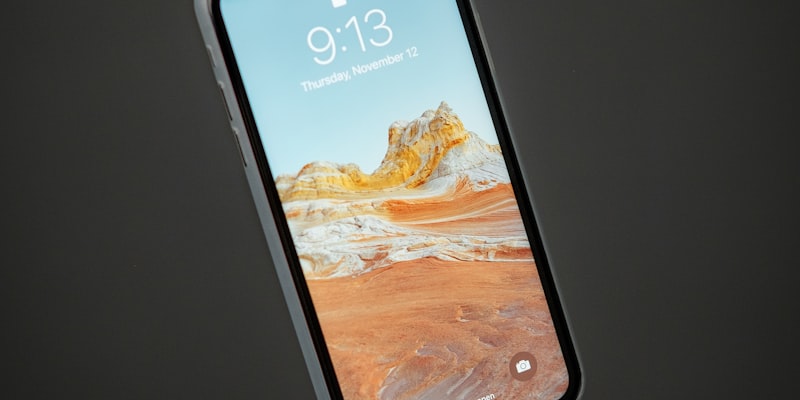
Since 2017, every iPhone with Face ID has required a visible cutout in the display to house its TrueDepth camera system. First it was the notch -- that distinctive black intrusion at the top of the screen that became one of the most recognizable (and most polarizing) design elements in smartphone history. Then, with the iPhone 14 Pro, Apple replaced the notch with the Dynamic Island, a smaller pill-shaped cutout that cleverly integrated software animations to make the hardware interruption feel purposeful. But a cutout is still a cutout. And according to multiple analyst reports and supply chain signals, Apple is finally preparing to eliminate it entirely.
How Face ID Currently Works
Understanding why this is difficult requires understanding what Face ID actually does. The TrueDepth system consists of several components: a dot projector that casts more than 30,000 infrared dots onto your face, an infrared camera that reads the resulting pattern, a flood illuminator that ensures the system works in darkness, and the front-facing camera itself. These components need a direct, unobstructed view of the user's face. They also need to emit and receive infrared light, which is why they have historically required a physical opening in the display.
The challenge of moving these components beneath the display is not simply a matter of miniaturization. OLED panels, even at their thinnest, are not transparent to infrared light in the wavelengths that Face ID uses. The pixel array, the thin-film transistor backplane, and the various encapsulation layers all absorb or scatter IR radiation. To make under-display Face ID work, Apple needs either a display that is selectively transparent in the relevant IR bands or a sensing system that can function with significantly degraded signal quality.
What the Patents Reveal
Apple has been filing patents related to under-display sensing for years, and the filings have become increasingly specific and practical. One notable patent granted in late 2025 describes a display architecture where the OLED pixel density is reduced in a small region directly above the Face ID sensors, creating a semi-transparent window that allows sufficient IR transmission while still displaying content to the user. The lower pixel density in this region would theoretically be invisible to the naked eye at normal viewing distances, since the area is small and located at the top edge of the screen where UI elements like the status bar provide natural visual camouflage.
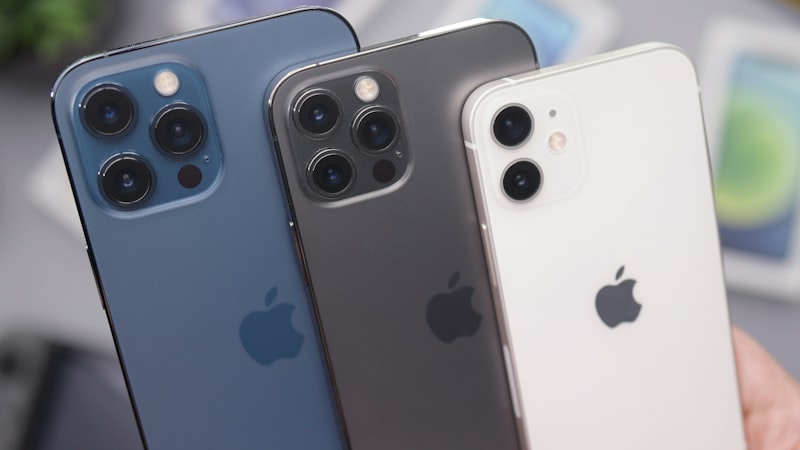
Display technology has become the primary differentiator in premium smartphones
Another patent describes a computational approach: using multiple lower-resolution IR readings taken through the full-density display and combining them algorithmically to reconstruct a face map of equivalent accuracy to the current system. This would be analogous to how computational photography uses multiple noisy exposures to produce a clean image. The advantage of this approach is that it would not require any modification to the display panel itself, though it would demand more processing power and might introduce a slight delay in authentication.
The Display Quality Question
For a publication focused on iPhone display technology, the most important question about under-display Face ID is not whether it will work, but whether it will compromise screen quality. Samsung has shipped under-display cameras on its Galaxy Z Fold series for several generations, and the results have been instructive. The region of the display above Samsung's under-display camera is visibly different when displaying certain content -- particularly solid colors and gradients. The pixel arrangement is altered to allow light through, and while Samsung has improved the effect with each generation, it remains noticeable under close inspection.
Apple's bar for display quality is notoriously high. The company spent years refining its OLED color accuracy, brightness uniformity, and viewing angle performance before it was satisfied enough to ship OLED on its flagship phones. It seems unlikely that Apple would accept a visible artifact in the display, even a subtle one. This suggests that whichever approach Apple uses -- reduced pixel density, computational reconstruction, or something else entirely -- it will need to be essentially invisible to the user under all normal viewing conditions.
Industry sources suggest Apple has been working with Samsung Display on a specialized OLED panel that uses a novel sub-pixel arrangement in the sensor region. Rather than simply reducing pixel density, this approach reportedly maintains the same effective resolution by using smaller but more closely spaced sub-pixels in an altered geometric pattern that creates sufficient gaps for IR transmission without a visible change in display quality. If accurate, this would represent a genuine advancement over what any Android manufacturer has achieved to date.
What a Full-Screen iPhone Looks Like
Assuming Apple successfully moves Face ID under the display, the result would be the first truly full-screen iPhone -- a device where the display extends uninterrupted from edge to edge and top to bottom, with only the thinnest of bezels framing the panel. No notch. No Dynamic Island. No pill-shaped cutout. Just screen.
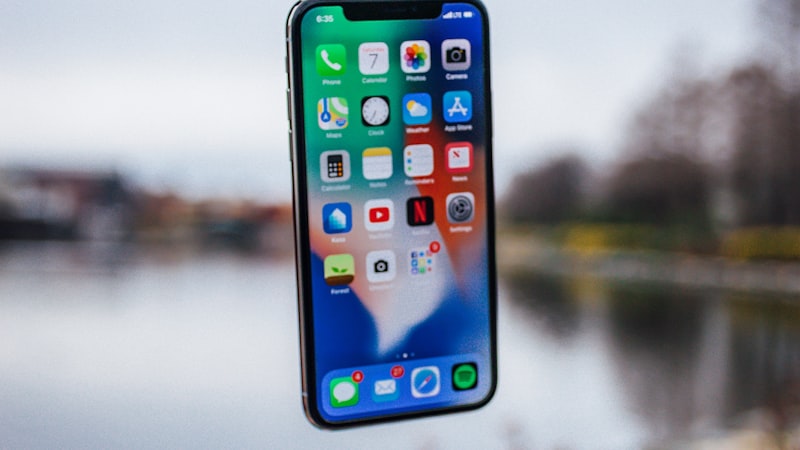
Every generation brings measurable leaps in colour accuracy and brightness
This has implications beyond aesthetics. The Dynamic Island, for all its cleverness, occupies screen real estate that could otherwise display content. Eliminating it would give developers access to the full display area for the first time, which matters for immersive applications like games, video playback, and augmented reality. It would also simplify the already complex set of safe area insets that iOS developers must account for when laying out their interfaces.
There is, however, a counterargument. The Dynamic Island has become a genuinely useful software feature, surfacing live activities, timers, navigation directions, and music playback in a persistent, glanceable location. If the hardware cutout disappears, Apple will need to find a new home for this functionality. A software-only Dynamic Island -- rendered as a floating element rather than anchored to a hardware feature -- is one possibility, but it would lose the visual trick that made the original implementation feel so natural.
Timeline
Display technology has become the primary differentiator in premium smartphones
The consensus among display industry analysts is that under-display Face ID is most likely to debut on the iPhone 18 Pro models in September 2026. Some analysts believe it could slip to 2027 if yield rates on the specialized display panels are not sufficient for Apple's volume requirements. Either way, the technology appears to be in the final stages of development rather than the early exploratory phase.
When it arrives, it will mark the end of a nearly decade-long journey from the original Face ID notch to a seamless display surface. For those of us who care about display technology, it will be one of the most significant visual changes to the iPhone since the transition from LCD to OLED. The screen has always been the iPhone's defining feature. Soon, there will be nothing but screen.